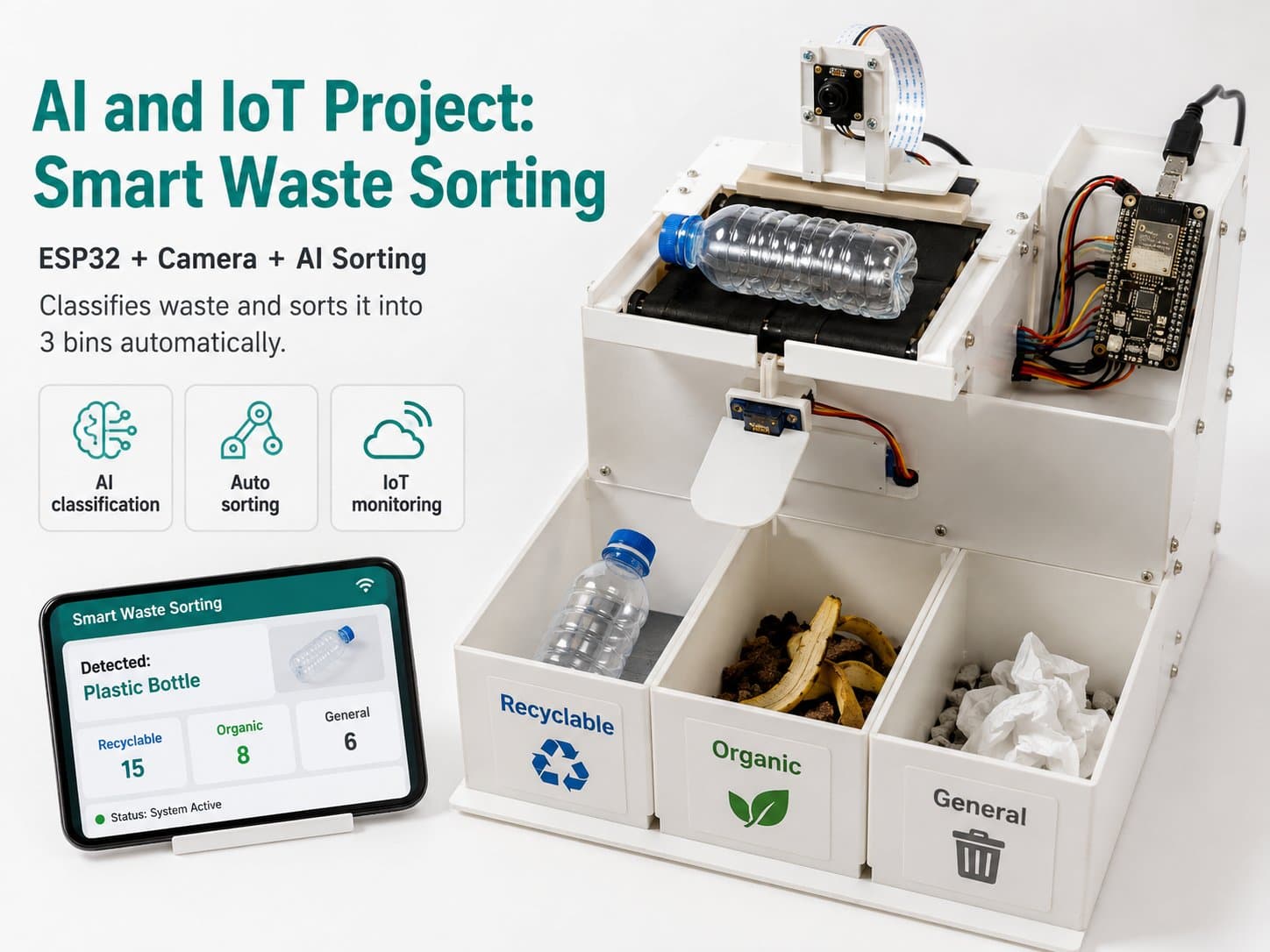
Part 6: Optimizing and Improving the System
1. Analyzing the system's operating results; 2. Methods for optimizing the AI model; 3. Tuning sensors to improve accuracy; 4. Using real-world data to improve the model; 5. Conclusion and next steps for the project; 6. Sharing experience and real-world results.
Part 6: Optimizing and Improving the System
1. Analyzing the System's Operating Results
Evaluating the waste-sorting system's performance should rely on metrics like accuracy, sensitivity, and specificity. Use data from real sorting runs to analyze results, identify which waste types the system misclassifies, and understand why.
2. Methods for Optimizing the AI Model
Fine-tuning: use real-world data to fine-tune the pre-trained model. This helps the model adapt better to the specific waste types in the real environment.
Data Augmentation: augment the data by generating variations of the original images (rotating, adjusting brightness, cropping) to improve the model's generalization.
Hyperparameter Tuning: tune parameters like the learning rate and batch size to optimize training.
3. Tuning Sensors to Improve Accuracy
Sensors need periodic calibration to maintain accuracy. Here's how to tune them:
Calibrating the Load Cell: use a reference weight to determine the error and readjust the weight sensor's parameters.
Checking the Metal Sensor: make sure it works accurately under different environmental conditions.
Positioning the Distance Sensor: place it in the optimal position for the most effective object detection.
4. Using Real-World Data to Improve the Model
Use real data from uncertain or incorrect sorting runs to retrain the model:
// Ví dụ lưu trữ dữ liệu để huấn luyện lại
json data = {
    "image": "trash_example.jpg",
    "ai_prediction": "plastic",
    "confidence": 0.60,
    "sensor": {
        "metal": false,
        "weight_g": 20
    },
    "final_label": "unknown",
    "human_correct_label": "paper"
};
// Lưu dữ liệu vào file cho quá trình fine-tuning
5. Conclusion and Next Steps for the Project
The smart waste-sorting system needs continuous improvement to raise accuracy and performance. Next steps include expanding the range of sorted waste types, improving the AI model, and optimizing the sensors.
6. Sharing Experience and Real-World Results
Using multiple signals from different sensors combined with the AI model significantly reduced the sorting error rate.